Friday, 6 December 2013

ROY SMITH COMES 2ND AT GoMW AWARDS 2013

Congratulations to Roy Smith, for his book Amédée Gordini - a true racing legend, published by Veloce in April this year, which came second in the prestigious Mercedes-Benz Award for the Montagu of Beaulieu Trophy at The Guild of Motoring Writers awards in London last night.

Jo Watkins, Roy Smith and Ralph Montagu. Photo by Jeff Bloxham

The competition was to determine the greatest contribution in 2013 for recording in the English Language, the history of motoring or motorcycling in any form, including, books, video, broadcasting media.

Amédée Gordini - a true racing legend is a story of excitement, laughs, astonishment and anger – a story of the determination of a man with a dream and a passion for motor racing in the big leagues. It is the first time that the story of the Gordini racing team has been documented in English, and the first complete story of Gordini himself in any language. The book was also shortlisted for Publication of the year 2013 at The International Historic Motoring Awards 2013.

Roy Smith's hallmarks are intricate research, sourcing hundreds of photos, first-person interviews, detailed diagrams, and a talent for uncovering fresh new information about a rare subject. Roy won the same GoMW award outright in 2010 for his work Alpine Renault – The Sports Prototypes Vol 1 & 2.

Roy commented: "I'm delighted to be back on the podium again at the second attempt with the Gordini book, looks like we have our work cut out to stay there!"

Roy Smith's latest masterwork Alpine Renault – the fabulous berlinettes, was published by Veloce in October 2013.

Independent reviews of Amédée Gordini - a true racing legend:

"Book of the month" – Classic & Sports Car

“Utterly absorbing.” – Classic Cars

***** – Auto Express

“Gordini’s endless enthusiasm and prolific output make for an involving tale.” – Motor Sport

“The wealth of information here is staggering, and the race-by-race summary is particularly welcome.”– Octane

Watch an interview with Roy Smith on YouTube!


RECORD-BREAKING BLUEBIRD CN7 REUNITED WITH ORIGINAL NOSE PANEL

The famous Bluebird CN7 has been reunited with its original damaged nose panel, thanks to a donation from Stadco to the Campbell family. The original front nose panel from Donald Campbell’s famous World Land Speed Record Breaker, the Bluebird CN7, was returned to and replaced at the Coventry site after being damaged during the land speed record attempt in 1960, where it has remained ever since.

The handover to the Malcolm Campbell Heritage Trust took place at an event at The National Motor Museum in Beaulieu, where the nose panel will join four iconic World Land Speed Record cars, including the Bluebird CN7 and Sir Malcolm Campbell’s Blue Bird 350hp, for a brand new Land Speed Record Breakers display.

Following the failed land speed attempt at the Bonneville Salt Flats in 1960, the damaged Bluebird was shipped back to the site in the Midlands. While the design updates were made, including the addition of the tail fin to stabilise the vehicle at speed, Motor Panels, now Stadco, set to work repairing the Bluebird. The nose panel had been creased in the crash at Bonneville and was removed and replaced.

The old hood panel displaying the Union Jack and US flags was set aside and spent the next 50 years at the Coventry site. Following the discovery of other artefacts, including detailed original records and correspondence between the Campbells and the Stadco project team, and 26 reels of unique 16mm film footage from 1960-1963, Stadco decided that a new home should be sought for the nose panel to properly reflect its historic significance.

Stadco’s Product Development Director, Paul Jaggers, said: “We are very proud of our historic link to Bluebird and these artefacts were a very exciting find for us. We were keen to ensure they found the right home and are very pleased to donate them to the family trust.”

Source: Stadco

Available from Veloce!
Bluebird CN7 - The inside story of Donald Campbell’s last Land Speed Record car
By Donald Stevens

Records the development, construction and operation of the last wheel-driven land speed record breaking car that the UK produced, and tells how the tragic demise of Donald Campbell prevented it from reaching its full potential. A unique account of a legendary feat of engineering. More info.

Thursday, 5 December 2013

NIGEL BENNETT'S SOLUTIONS FOR F1 & INDYCAR – INTERVIEW BY GORON KIRBY

Article reproduced under kind permission from www.gordonkirby.com

Nigel Bennett enjoyed a long career designing Formula One and Indy cars. He started his career in the seventies as a Firestone tire engineer in Formula One and worked at Lotus, Ensign and Theodore before turning his hand to Indy cars with Lola. After producing a few successful Lola Indy cars, Bennett was hired by Roger Penske and through the late eighties and nineties he designed a series of beautiful and very successful Penske Indy cars.

A longtime boating and yachting enthusiast Bennett does some boat design work these days to keep him occupied in his retirement. He's also kept his hand in the racing business in recent years by doing some technical consulting work for the FIA and after reading last week's column, ‘Losing our way', Nigel sent me an email saying he had some suggestions for improving the show in F1 and IndyCar. I called him and we enjoyed a pleasant chat about the state of the sport.

"I think Formula One does a good job with the television commentaries here in the UK and the build up to each race," Bennett remarked. "They've got informed, experienced guys who are past drivers and team owners and provide you with lots of good information and they do it in an entertaining way.

© Bob Tronolone

"But the racing is not very inspiring, particularly when one guy is winning all the races. Okay, there's some overtaking because of KERS and feathering the wings with the DRS thing, but a lot of people don't seem to think much of that stuff. They think it's artificial. A lot of people who used to be motor racing fans don't bother to watch F1 anymore."

Bennett emphasized that extreme cost is F1's biggest problem.

"The main problem with Formula One is that it's just too expensive for all but about four teams," he said. "The rest of them are taking paying drivers who are less skilled than many others. There are some really good drivers like Hulkenberg and di Resta who may not have drives next year.

"I have to say that what goes on inside some of these big teams is absolutely ludicrous. There are drawing offices going off into the distance as far as you can see with eighty or ninety people working away at computer screens.

"The cars are incredibly complicated. They're beautifully made but unbelievably complicated with all kinds of stuff that's largely unnecessary and unappreciated by the fans and media. It makes for paying jobs for the young engineers but as far as the general public is concerned I don't think there's much interest in that.

"Look at the front wings with all the little bits and pieces stuck on them. And for what? Yes, they're producing phenomenal aerodynamic performance figures but none of that stuff bares any relation to anything else in the world and it doesn't look nice.

"Airplanes don't have bits like that stuck all over them. They're sleek, the way racing cars used to be, and there's no place for that kind of stuff on road cars. It's just jobs for the boys to spend the money they've been given."

Bennett believes big cuts in downforce and tire grip are essential to making F1 a better show.

Kirby, Bennett & Danny Sullivan, Pocono 1989
© Racemaker/Torres

"In my opinion, they need to reduce downforce by 50 percent, reduce the front tire and wheel width by 20 percent and increase the rear tire width by 10 percent," he itemized. "They also need to free up the weight distribution rules and change the tire construction so that the tires produce their maximum cornering force at much higher slip angles than the current radials.

"I suspect this would mean going back to bias or cross-ply tires as they were in the ‘70s and ‘80s. So what if that is not the way road car tires are made? Road cars are completely different from racing cars in so many ways.

You still wouldn't see the driver's arms flailing around but the driver's skill would be on view as the cars would drift and braking distances would be much longer and cornering speeds much lower so that overtaking would be more frequent.

"Right now, the braking distances are so short and the cornering speeds are so high that there's just no time to outbrake the other guy. So a huge reduction in downforce and a similar, huge reduction in tire performance is required. If you had half the size of front tire you wouldn't be able to brake so hard in such a short distance.

"I think the reason the cars used to be so much more spectacular was largely due to the type of tires. Cross-ply tires made for bigger slip angles and more sliding than we have today with radial tires.

"People say we can't go back to cross-ply tires, but why not? If you have one tire manufacturer you can ask them to do anything. Formula One persuaded Pirelli to build tires that wear out after ten laps, which is not good for their public image. But that's what Formula One wanted and that's what Pirelli have done. So surely you can ask a tire company to build smaller, cross-ply tires.

"I'm sure they've got the technology to do it and the cars would be more spectacular to watch. I would also suggest they would be a greater test of the drivers' skills."

Bennett believes narrower tires also would be a benefit to IndyCar.

"There's been a lot of criticism over recent years about Indy cars having too much downforce and too little power so that they run closely together on some tracks so you get pack racing which is very dangerous on a track where they're flat-out all the way around whether it's a one-mile oval or a banked track like NASCAR.

"To me, a reduction in tire size would be very effective for IndyCar in these circumstances. The cornering speeds would be less, the straightaway speeds would be greater and at a stroke it would break up the field and allow it to open up a bit so there would be more passing and racing.

"If you reduce the tire sizes by fifteen percent then the compounds have to get harder to withstand the temperature. Straightaway speeds would go up because the drag would be reduced and you would get braking into the corners because the apex speed would be lower. It's one way out of this problem that's never been suggested."

© Paul Webb

Bennett says F1 is unable to make major changes because of the need for unanimity under the Concorde Agreement.

"I'm glad they're getting rid of the high noses next year because they look pretty stupid," he remarked. "That's a step in the right direction, but they need to reduce downforce substantially.

"It's easy to design a set of rules to achieve that, but it's not easy to get people to agree. They've all invested millions of dollars in wind tunnel testing and aerodynamic work and they don't want to lose the advantages they've gained.

"They've talked endlessly for some years about cost reduction but that seems to have fallen by the wayside. In fact, I've been involved in some of those discussions and the problem is nobody trusts anybody else to do it properly.

"Until the governing body comes up with some way of controlling budgets there's not going to be any changes. If you stop them spending money in one area then they'll spend more on their motorhomes and marketing. Do you need fifty or sixty people per team at the racetrack? Or a dozen trucks, like several of the bigger teams takes to a race?"

Bennett believes next year's new turbo formula will prove to be very costly.

"It sounds like the engine package is going to be very expensive next year," he observed. "It looks like the split between the haves and the have nots is going to become even bigger."

I mentioned to Bennett that Adrian Newey remarked to my colleague Maurice Hamilton a few weeks ago that he was worried that next year's new F1 cars will be even uglier than this year's cars.

"It's funny how you very quickly get used to something new and different," Bennett remarked. "When they brought in narrow rear wings and wider front wings to F1 everyone said they looked ugly and worried about it. But they seem to have grown on everyone and nobody complains so much anymore, although the front ends are pretty ugly."

Bennett doesn't expect anyone in F1 or the FIA to act on any of his suggestions.

"I don't suppose that whatever we say will have much effect," he chuckled. "One thing I found with the FIA is they say we can't change Formula One too much because GP2 or Formula Renault will then be too quick. It seems to me that the FIA doesn't have the guts to make big decisions or maybe it's because the teams have got too much say over what they've invested. They have to get unanimous agreement among the teams to make any big changes and they can't get it."

Power and political struggling always come first in big-time motor racing, ahead of rational thinking. Thus it ever was and is likely to continue.

Source: Gordon Kirby

Available now from Veloce! Inspired to Design – F1 cars, Indycars & racing tyres: the autobiography of Nigel Bennett

The true life story of one of Britain’s most successful racing car designers of the 80s and 90s.
Nigel Bennett’s unique autobiography describes his life and career, from growing-up influenced by car design, to his education and the building of his 750 specials. He describes his work as Firestone Development Manager, recounting many tales of the outstanding designers and drivers of the period. Detailing his work in Formula 1, as a Team Lotus engineer, and then as Team Ensign designer, he also covers his Indycar designs at Theodore, Lola Cars and Penske Cars. Life after his retirement, his involvement in boat design and with modern F1 teams, are also recounted. More info.

Friday, 29 November 2013

AUTHOR PROFILE No.8: JOHNNY TIPLER

Motoring journalist & author Johnny Tipler has a new book published this month. He's no stranger to scribbling about cars – here's his story ...

Driving a Porsche 356 Carrera Cabriolet.

Driving Porsches for a living? It’s tough, but someone’s got to do it. And one of Veloce Publishing’s original authors, Johnny Tipler, does just that: writing for three of the UK’s independent Porsche titles, 911 & Porsche World, Total 911 and Classic Porsche. Topics include interviews with famous names who’ve raced or rallied Porsches – aces like Walter Röhrl, Bjorn Waldegård, Hans Stuck, Jürgen Barth and Vic Elford – and the specialists who tune them, such as Alois Ruf, Willy Brombacher, Josh Sadler and Duel’s Ed Poland, with reviews of important and specially-commissioned cars offered by the likes of Paul Stephens, Lee Maxted-Page, Specialist Cars of Malton, MCP Motorsport, and Adrian Crawford.


Owned for eight years, Johnny’s own car is a Porsche 964, affectionately dubbed The Peppermint Pig, thanks to its original mint green hue. This vehicle also provides Johnny with a fund of stories, since he drives it when following events like the Monte Carlo Historic Rally, Mille Miglia and Roger Albert Clark (RAC) Rally, or when covering meetings such as Le Mans Classic, Spa Six Hours, Nürburgring Old Timer and the Zandvoort Historic Grand Prix. It serves as transport when he visits defunct racetracks like Berlin’s Avus, Reims, Rouen, and Porto. In February 2013, when it had logged 315,000km, the 3.6-litre flat-six was rebuilt at Kontich-based 911Motorsport near Antwerp, and in November it carried Johnny to Portugal and back while he put his Douro holiday home on the market.

'Peppermint Pig' in Portugal.

With some 35 books published over the last 25 years, including driver biographies of Graham Hill, Ronnie Peterson and Ayrton Senna, Johnny’s first tome was also Veloce Publishing’s inaugural title, Alfa Romeo Giulia Sprint GT and GTA, just re-printed in a new large format third edition. He’s written three books on Alfas – another Veloce title, now out of print, was Alfa Romeo Berlinas; other marque and model books cover Morgan, Jensen, Caterham, TVR, Fiat (124 Spyder), Land Rover, Mini-Cooper, Triumph Motorcycles, and Harley-Davidson, as well as more general tomes on heavy equipment, racing cars, automobile stylists, and trucks.

The first ever Veloce book! From 1991, (part number V000): Alfa Romeo Giulia Coupé GT & GTA by Johnny Tipler.

Johnny verges on the prolific when writing about Lotus, with eight titles published, mostly on racing cars like the Types 25/33 and 78/79, plus the Elise, and the gestation and construction of the Evora. For six years (from 2005 to 2011) Johnny wrote most of the features for Lotus Cars’ in-house Lotus Club International quarterly magazine, in the course of which he travelled to locations as far-flung as Las Vegas, Marrakech, Indianapolis, Stockholm, Lake Garda, Daytona, Morzine (Geneva), Monticello (New York), Route Napoleon (Grasse), Route 66 (Arizona), The Ice Hotel (Kiruna), Porto, and Lime Rock (Connecticut). He composed drive stories at the wheel of various Elises, Exiges, Europa, 2-Eleven and Evoras, and interviewed aces associated with the marque, such as Mario Andretti, Sir Stirling Moss, John Surtees, Johnny Herbert, Jackie Oliver and Emerson Fittipaldi, plus Lotus affiliated stars like Jay Leno, Rick Wakeman and Chis Rea. As well as key factory personnel, Johnny also established an amiable rapport with Clive Chapman, who provided access to legendary Lotus racing cars, present-day drivers like Duncan Dayton, James King, Dan Collins, Katsu Kubota and Chris Locke, as well as the CTL mechanics, some of whom, like Bob Dance, Eddie Dennis and Chris Dinnage, Johnny knew when he was JPS Motorsport Press Officer, an era spent mostly living at racetracks during the ’70s and ’80s.
Johnny puts his vehicular passion down to his father’s job as a commercial traveller, having spent a great deal of his school holidays as passenger in dad’s cars: an Austin Westminster and VW Beetle are fondly remembered, and it was his father’s pirouette into a hedge in a Porsche 356 that kindled his childhood obsession with the Zuffenhausen marque. The most exotic Porsches he’s driven – for features in 911 & Porsche World magazine – include the 906 and 910 prototype sports-racing cars, and the Ruf RT12S, probably the most evolved example of the 911. As well as a 3.2 Carrera, other notable cars Johnny’s owned over the years include a 1340cc Ford Anglia, a trio of MGBs and an MGC, Lotus Elan S4 and BMW 1602. There has been a glut of Alfa Romeos, including a Giulia 1300Ti (upped to 2.0-litres), a 1750 Berlina, two Alfetta GTVs and a GTV6 – converted into a race car for the AROC series in 1989 and then back again – and an Alfa 75 3.0 and a 155 V6. Current family hack is an Alfa 156.

Johnny’s previous Veloce offering is La Carrera Panamericana, subtitled ‘the world’s greatest road race,' which he covered as a journalist in ’06 and ’07, and then wrote up as a book in 2008. He went back in 2011 to drive the event as a competitor, spending seven days and 2000 hair-raising and hilarious miles travelling the length of Mexico in company with 115 other gung-ho racers, which he regards as his ultimate motoring experience. The tale is soon to been reissued by Veloce as an eBook, and includes a new chapter on Johnny, and co-driver Sarah Bennett-Baggs’ exciting experiences in their Porsche 914/4 GT, as well as some video clips. It was so good he vows to go back and do it again. And then another chapter can be added!

Johnny Tipler and Sarah Bennett-Baggs,with Porsche 914:GT4 in Oaxaca, at La Carrera Panamericana, 2011.

Alfa Romeo Giulia GT & GTA – Enlarged & revised 3rd edition (Limited to 1500 copies) by Johnny Tipler. Coming soon! Click here for more info.

NIGEL BENNETT INSPIRED TO DESIGN TRAILER

Ever wondered what it would have been like to work in F1 at Team Lotus in the 1960s & 1970s alongside the maverick Colin Chapman? Or with James Hunt during his F3 spell at Hesketh Racing? We asked a man who has done both, and much more! That man is Nigel Bennett, the author of brand new autobiography Inspired to Design. We've recorded a fascinating interview with Nigel, which we'll publish on our YouTube channel in the near future. In the meantime, enjoy this short 2-minute trailer ...


New! Inspired to Design – F1 cars, Indycars & racing tyres: the autobiography of Nigel Bennett

The true life story of one of Britain’s most successful racing car designers of the 80s and 90s.
Nigel Bennett’s unique autobiography describes his life and career, from growing-up influenced by car design, to his education and the building of his 750 specials. He describes his work as Firestone Development Manager, recounting many tales of the outstanding designers and drivers of the period. Detailing his work in Formula 1, as a Team Lotus engineer, and then as Team Ensign designer, he also covers his Indycar designs at Theodore, Lola Cars and Penske Cars. Life after his retirement, his involvement in boat design and with modern F1 teams, are also recounted. More info.

Nigel Bennett was one of Britain’s most successful racing car designers of the 80s and 90s. His Indycars won 79 races, five National Drivers Championships, five Constructers Championships and five Indy 500 wins.
He raced his home-built 750F car, and was Development Manager for the Firestone Racing Division, working with Team Lotus, Ferrari, BRM, Hesketh, Porsche and JW Automotive.
He worked at Hesketh Racing before moving on to Team Lotus, and was engineer to Mario Andretti and Ronnie Peterson, becoming Chief Engineer to Colin Chapman. Designer of the Ensign F1 and Theodore Indy cars, Nigel was head-hunted by Lola Cars, later becoming Penske Cars’ Chief Designer, a position he held for eight years.


Thursday, 28 November 2013

VELOCE READERS RIDES: 1

Our friends, Chris & Gabe, from Arkansas sent us some awesome pics of their 'toys.'

We love seeing photos of anything on wheels, so why not email us your photos to and we'll feature the best ones here each month, and also on our Facebook and Twitter pages.

Thursday, 14 November 2013

VIDEO: FERRARI 288 GTO – GROUP B SPEC!

This epic new Ferrari 288 GTO video is a MUST SEE!


Available now from Veloce!
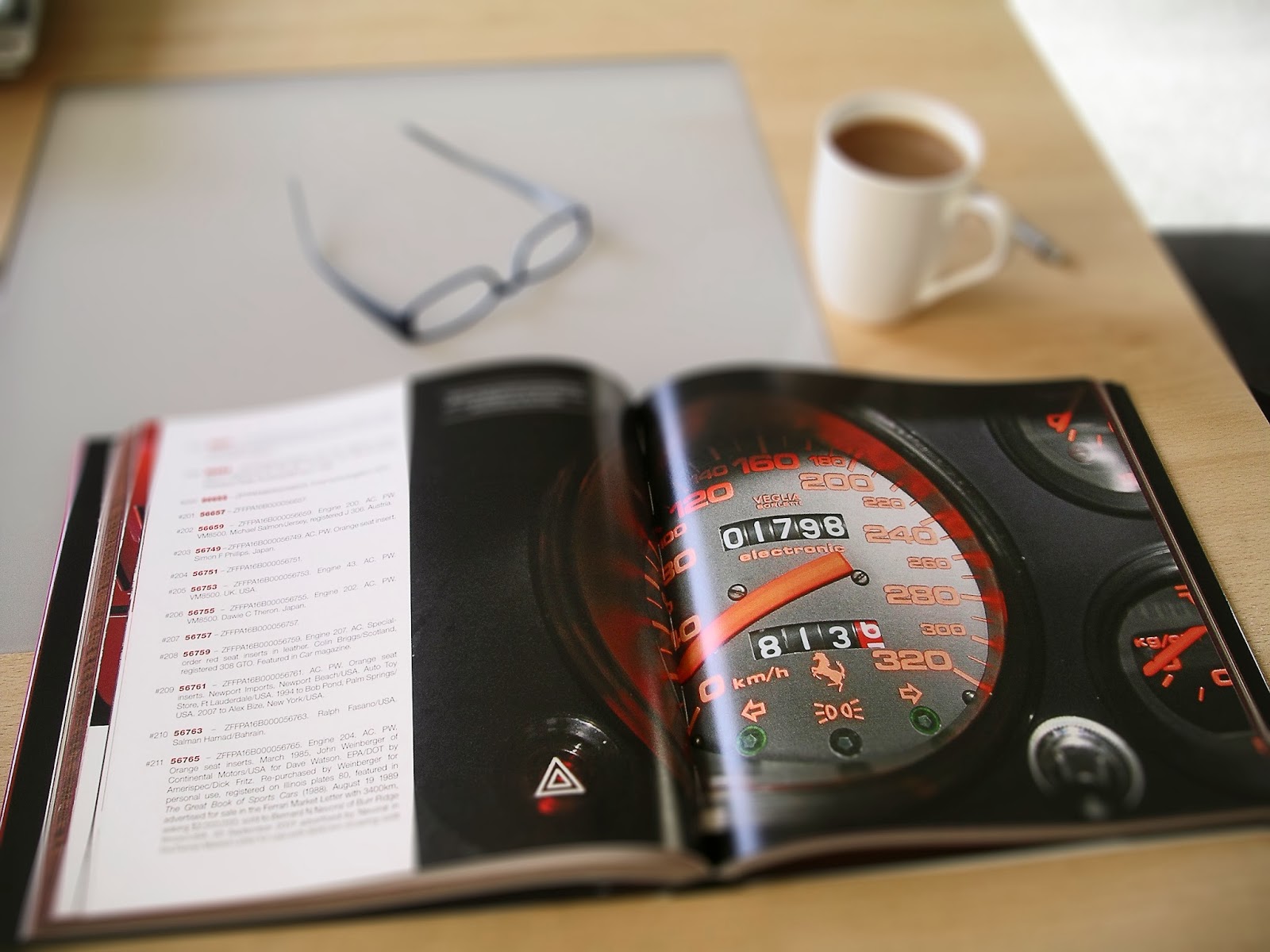
The Book of the Ferrari 288 GTO by Joe Sackey.

Over three years in the making, this book covers the background, conception, design, production and aftermath of the iconic Ferrari 288 GTO, including the prototypes, the early production cars, the mainstream production cars in their various specification guises, and the Evolution cars planned for the aborted Group B FIA race series.

The work features nearly 400 relevant photographs, from original production images to the cars as they are today, including the 1984 Geneva Salon where the car debuted, the first ever GTO Reunion in 1985, current salon and action images, right up to the 25th Anniversary Ferrari 288 GTO Reunion held in America in 2009. Also featured are the actual factory production approval sheets, as filed with the Italian government, in an illustrated technical drawing form, along with a chassis by chassis register of every 288 GTO built, including destroyed prototypes, production cars, and GTO Evoluziones – in fact all 284 cars ever built.

This book contains essential resources covering all aspects of the car, including archives, maintenance specialists, restoration specialists, worldwide clubs, parts sources, etc. A comprehensive, beautifully illustrated look at a unique sports car, and a must-have for true Ferrari fans. More info.


Click here for more info about the book.